


Introduction, Why It Matters & Getting Started
Introduction
The best way to clean windows isn’t about buying expensive cleaning sprays or spending hours scrubbing stubborn stains. Professional window cleaners rely on a few simple tools, the right cleaning solution, and a proven technique to leave glass crystal clear and streak-free in less than 30 minutes.
Dirty windows don’t just block your view they reduce natural light, make rooms appear darker, and can even shorten the lifespan of your glass by allowing dirt, mineral deposits, and pollutants to build up over time. Fortunately, you don’t need professional experience to achieve amazing results. With the right approach, anyone can clean windows like a pro.
In this complete 2026 guide, you’ll learn the exact methods professionals use, including the best homemade cleaning solution, essential tools, step-by-step instructions, and expert tips to keep your windows sparkling all year long.
Why Clean Windows Matter More Than You Think
Many homeowners spend hours cleaning kitchens, bathrooms, and floors while completely forgetting about their windows. However, clean windows can dramatically improve both the appearance and comfort of your home.
Keeping your windows spotless offers several benefits:
- Allows more natural sunlight into your home.
- Makes rooms feel larger and brighter.
- Improves curb appeal.
- Prevents permanent mineral and hard water stains.
- Extends the life of your windows.
- Creates a cleaner, healthier indoor environment.
Whether you live in a house or apartment, maintaining cleanr windows is one of the easiest ways to refresh your living space without spending much money.
Why Most People Struggle to Get Streak-Free Windows
If you’ve ever finished cleaning your windows only to notice streaks once the sun shines through, you’re not alone.
Most people unknowingly make a few common mistakes:
- Using paper towels that leave lint behind.
- Cleaning windows in direct sunlight.
- Spraying too much cleaner.
- Using dirty cloths.
- Wiping glass in random circular motions.
- Forgetting to clean the window frames first.
Professional cleaners avoid these mistakes by using microfiber cloths, high-quality squeegees, and a simple cleaning solution that removes dirt without leaving residue.
Professional Window Cleaning vs DIY Cleaning
Many people think professional cleaners use expensive chemicals or specialized equipment. In reality, their biggest advantage is proper technique.
| DIY Method | Professional Method |
|---|---|
| Paper towels | Microfiber cloths |
| Household spray cleaners | Vinegar-based solution |
| Circular wiping | Top-to-bottom squeegee technique |
| Random cleaning | Systematic process |
| Frequent streaks | Crystal-clear finish |
Once you learn these professional techniques, you’ll get similar results without paying for a cleaning service.
Essential Tools You’ll Need
The good news is that you don’t need expensive equipment. Most of these tools are affordable and reusable.
Professional Window Cleaning Checklist
✅ 10–12 inch professional squeegee
✅ Microfiber cloths
✅ Soft sponge or window scrubber
✅ Bucket
✅ Spray bottle
✅ Extension pole (for high windows)
✅ Step ladder (if needed)
✅ Soft brush or vacuum for window tracks
Using quality tools saves time and produces far better results than relying on paper towels or disposable wipes.
The Best Homemade Window Cleaning Solution
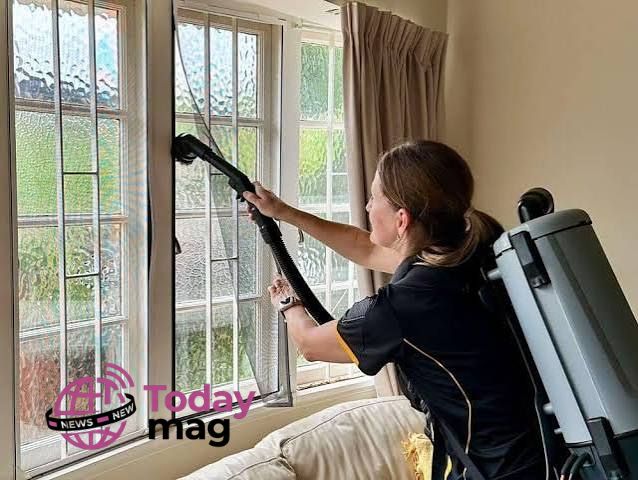
Professional cleaners often recommend a simple homemade mixture because it’s inexpensive, eco-friendly, and highly effective.
Recipe
- 2 cups warm distilled water
- ¼ cup distilled white vinegar
- ½ teaspoon grease-cutting dish soap
Mix everything in a bucket or spray bottle and shake gently.
This solution easily removes:
- Dust
- Fingerprints
- Grease
- Rain spots
- Light hard water stains
- Everyday dirt
If your home has hard water, always use distilled water to prevent mineral spots from forming on the glass.
Before You Start Cleaning
Preparation is one of the biggest secrets to professional-looking results.
Take a few minutes to:
- Move furniture away from windows.
- Remove curtains or blinds if necessary.
- Dust window frames and sills.
- Vacuum window tracks.
- Brush away cobwebs from exterior windows.
- Place a towel under indoor windows to catch drips.
These small steps prevent dirt from spreading onto freshly cleaned glass and make the cleaning process much faster.
Step-by-Step Professional Window Cleaning Process
Now that you have the right tools and cleaning solution, it’s time to learn the best way to clean windows using the same method trusted by professional window cleaners. Following these steps carefully will help you achieve crystal-clear, streak-free windows in under 30 minutes.
Step 1: Prepare the Window Area
Before applying any cleaning solution, prepare the area around the window.
Indoor Preparation
- Move furniture away from the window.
- Remove curtains or blinds if necessary.
- Place an old towel on the floor to catch drips.
- Dust the window frame and sill with a microfiber cloth.
- Vacuum dirt from the window tracks.
Outdoor Preparation
Exterior windows collect pollen, dust, leaves, bird droppings, and cobwebs.
Before washing:
- Brush away loose dirt.
- Remove cobwebs.
- Rinse heavily soiled windows with clean water if needed.
Taking just five minutes to prepare prevents dirt from spreading across the glass during cleaning.
Step 2: Apply the Cleaning Solution
Fill your spray bottle or bucket with the homemade window cleaner.
Apply the solution evenly across the glass without soaking it.
Using a microfiber-covered sponge or soft scrubber, gently loosen:
- Dust
- Fingerprints
- Water spots
- Grease
- Pollen
- Light mineral deposits
Work from the top of the window downward so dirty water naturally flows toward the bottom instead of running over already-cleaned areas.
Step 3: Use the Professional Squeegee Technique
This is where most people notice the biggest difference.
Professional cleaners rarely use paper towels because they leave lint and streaks. Instead, they rely on a high-quality squeegee.
How to Use It Correctly
- Place the squeegee at the top corner of the glass.
- Pull it downward using steady pressure.
- Overlap each stroke by about one inch.
- Wipe the rubber blade clean with a microfiber cloth after every pass.
- Continue until the entire window is clean.
For large windows, many professionals prefer an “S-shaped” motion because it reduces streaks and speeds up the process.
Step 4: Clean the Window Edges
Even after using a squeegee, small amounts of water usually remain around the edges.
Use a dry microfiber cloth to wipe:
- Window corners
- Glass edges
- Bottom frame
- Window sill
This final touch gives your windows a polished, professional appearance.
Cleaning Exterior Windows Like a Pro
Outdoor windows are usually much dirtier than indoor ones because they’re exposed to weather, pollution, and insects.
For the best results:
- Use an extension pole for high windows.
- Clean one window at a time.
- Scrub stubborn dirt before using the squeegee.
- Rinse your sponge frequently.
- Never let the cleaning solution dry on the glass.
If you’re cleaning second-story windows, always use proper safety equipment and avoid leaning too far from a ladder.
Don’t Forget Window Screens
Many people clean only the glass and forget about the screens.
Dirty screens quickly make clean windows look dusty again.
Cleaning Window Screens
- Remove the screen carefully.
- Brush off loose dirt.
- Wash with warm water and mild dish soap.
- Rinse thoroughly.
- Let it dry completely before reinstalling.
Clean screens improve airflow and allow more natural light into your home.
Clean Window Tracks and Frames
Window tracks often collect:
- Dust
- Dead insects
- Leaves
- Mold
- Pet hair
Vacuum the tracks first, then wipe them using a damp microfiber cloth.
For stubborn dirt, use an old toothbrush with your vinegar cleaning solution.
Clean tracks help windows slide more smoothly while preventing future dirt from reaching the glass.
Common Window Cleaning Mistakes
Avoid these mistakes if you want professional-quality results.
Cleaning in Direct Sunlight
Sunlight dries the cleaning solution too quickly, leaving streaks behind.
Using Paper Towels
Paper towels leave lint on the glass.
Using Too Much Cleaner
Excess liquid creates streaks and drips.
Dirty Cleaning Cloths
Always switch to a clean microfiber cloth once it becomes dirty.
Forgetting the Squeegee Blade
A dirty rubber blade spreads dirt instead of removing it.
Pro Tips for Faster Cleaning
Professional window cleaners save time with a few simple habits.
- Clean from top to bottom.
- Replace the squeegee rubber regularly.
- Fold microfiber cloths into quarters for better control.
- Keep a second dry cloth for final polishing.
- Use distilled water if your home has hard water.
- Clean windows on cloudy days for the best finish.
Following these tips will help your windows stay cleaner for longer.
Pro Tips, Maintenance Schedule, FAQs & Final Thoughts
Keeping your windows spotless doesn’t end after one cleaning session. Professionals know that regular maintenance and a few simple habits can keep glass crystal clear for months. In this final section, you’ll learn expert tips, seasonal cleaning advice, eco-friendly methods, and answers to the most common window cleaning questions.
Time-Saving Hacks Professionals Use
Professional window cleaners don’t just work hard they work smart. These simple tricks can help you finish faster while achieving better results.
1. Clean on Cloudy Days
Direct sunlight causes the cleaning solution to dry too quickly, leaving streaks behind. A cloudy day or early morning is the perfect time to clean windows.
2. Always Work from Top to Bottom
Gravity naturally pulls dirty water downward. Starting at the top prevents dirty water from dripping onto areas you’ve already cleaned.
3. Wipe the Squeegee After Every Pass
A clean rubber blade is the secret to streak-free windows. Wipe it with a dry microfiber cloth after every stroke.
4. Use Distilled Water
If your area has hard water, distilled water helps prevent mineral spots and cloudy marks on the glass.
5. Keep Two Microfiber Cloths
Use one damp cloth for cleaning and another dry cloth for polishing edges and corners.
These small habits can reduce cleaning time while producing professional-quality results.
Seasonal Window Cleaning Guide
Different seasons bring different challenges for your windows.
Spring
Spring is the ideal time to remove pollen, dust, and dirt that accumulated during winter.
Focus On:
- Window frames
- Screens
- Exterior glass
- Window tracks
Summer
Heat causes cleaning solutions to dry quickly.
Clean windows:
- Early morning
- Late afternoon
- On cloudy days whenever possible
Autumn
Leaves, rain, and wind create extra dirt.
During autumn:
- Remove leaves from window tracks.
- Wash exterior windows before winter.
- Check seals around frames.
Winter
Cold weather often causes condensation.
To reduce moisture:
- Clean interior glass regularly.
- Wipe condensation immediately.
- Keep window tracks dry.
Eco-Friendly Window Cleaning
You don’t need harsh chemicals to achieve sparkling windows.
Try these environmentally friendly alternatives:
- White vinegar
- Warm distilled water
- Mild dish soap
- Castile soap
- Reusable microfiber cloths
These options are safer for children, pets, plants, and the environment while still delivering excellent cleaning performance.
How Often Should You Clean Your Windows?
A regular cleaning schedule helps prevent stubborn stains and makes each cleaning session easier.
| Area | Recommended Frequency |
|---|---|
| Interior Windows | Every 2–3 months |
| Exterior Windows | Twice a year |
| Kitchen Windows | Every month |
| Bathroom Windows | Every month |
| Window Screens | Every 3–6 months |
| Window Tracks | Every 2–3 months |
Homes located near busy roads, construction sites, or coastal areas may require more frequent cleaning due to dust, pollution, or salt buildup.
Signs Your Windows Need Cleaning
Not sure when it’s time to clean?
Look for these signs:
- Streaks in sunlight
- Fingerprints on the glass
- Dust buildup around frames
- Water spots after rain
- Reduced natural light indoors
- Dirty or clogged window tracks
Cleaning your windows before dirt becomes heavy makes the job much easier.
Benefits of Regular Window Cleaning
Routine window cleaning offers more than just a clear view.
Major Benefits
- Increases natural light inside your home.
- Improves curb appeal.
- Prevents permanent hard water stains.
- Extends the lifespan of windows.
- Enhances indoor air quality.
- Makes rooms feel brighter and larger.
- Reduces mold and dirt buildup around frames.
- Saves money on costly repairs over time.
Keeping your windows clean also creates a more welcoming and comfortable living space.
Frequently Asked Questions
What is the best homemade window cleaner?
A mixture of 2 cups warm distilled water, ¼ cup white vinegar, and ½ teaspoon dish soap is one of the most effective homemade window cleaning solutions.
How do professionals clean windows without leaving streaks?
Professionals use a quality squeegee, microfiber cloths, and clean windows from top to bottom while wiping the squeegee blade after every pass.
Can I use newspaper instead of microfiber cloths?
Although newspaper was once a popular option, modern microfiber cloths provide better results without leaving ink or lint on the glass.
Why do my windows still look cloudy after cleaning?
Cloudiness is often caused by hard water minerals, leftover cleaning residue, or dirty tools. Using distilled water and a clean microfiber cloth usually solves the problem.
Is vinegar safe for all windows?
Vinegar is safe for most standard glass windows. However, always check the manufacturer’s recommendations for specialty coatings or tinted glass before use.
How long does it take to clean house windows?
With the right tools and technique, most homeowners can clean the windows in a standard room within 20 to 30 minutes.
Final Thoughts
Finding the best way to clean windows doesn’t require expensive products or professional services. By using a simple homemade cleaning solution, a high-quality squeegee, and proven cleaning techniques, you can achieve sparkling, streak-free windows in less than 30 minutes.
Consistency is the key to maintaining crystal-clear glass. Clean your windows regularly, use the right tools, and avoid common mistakes like cleaning in direct sunlight or using paper towels. With just a little effort, you’ll enjoy brighter rooms, improved curb appeal, and a clearer view all year round.
Whether you’re cleaning a single window or your entire home, these professional tips will help you achieve lasting results that make every room feel fresher, brighter, and more inviting.
