

Introduction
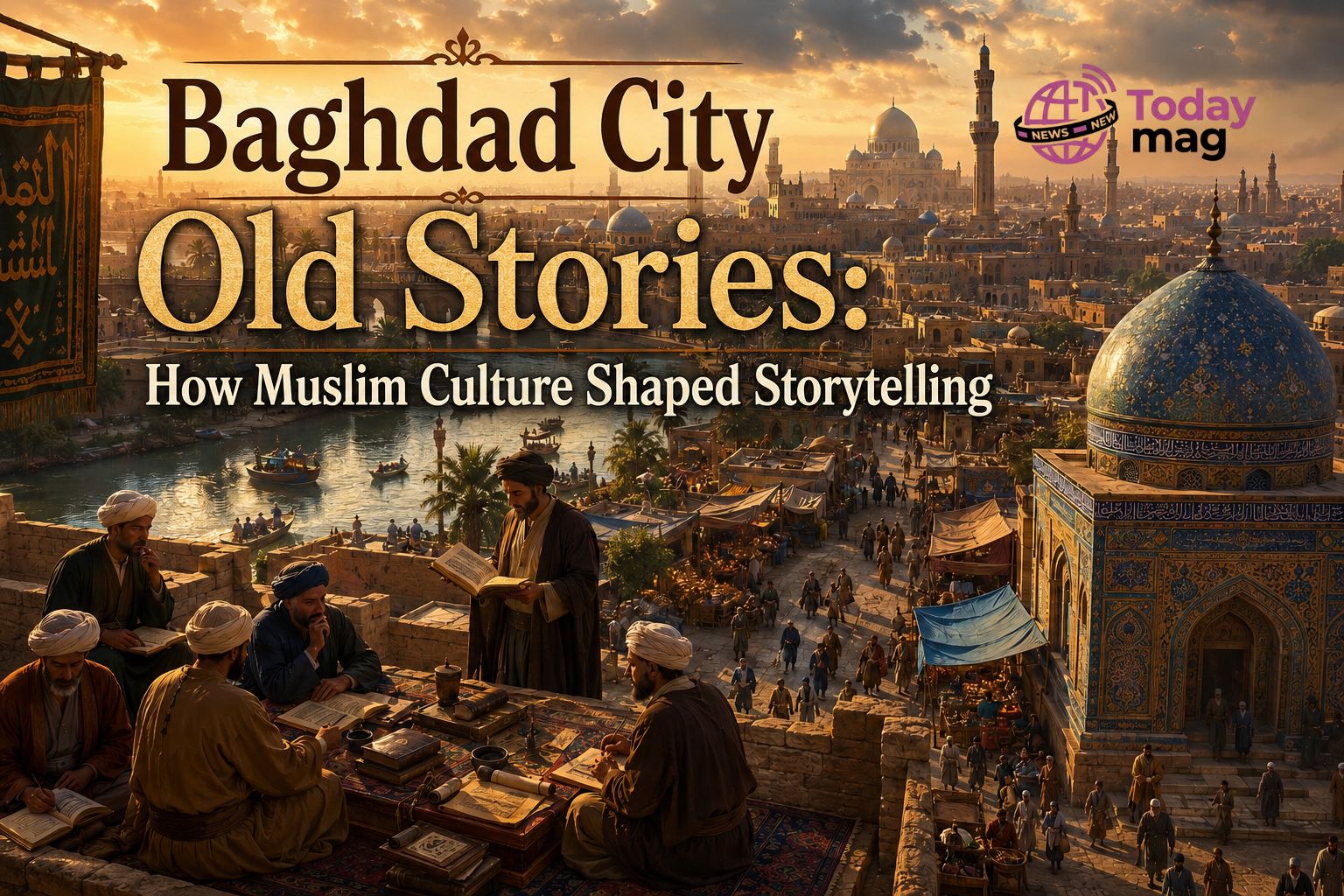
Baghdad City is more than a historic capital. It is a place where knowledge, imagination, and storytelling flourished for centuries. Founded during the Abbasid era, Baghdad became one of the most influential cultural centers in world history. Scholars, poets, travelers, and storytellers gathered within its walls, creating a rich tradition that continues to inspire readers today.
Long before modern books, films, and digital media, stories were shared in marketplaces, homes, mosques, and scholarly circles. These narratives entertained people, preserved history, taught moral lessons, and passed wisdom from one generation to the next. Many of the world’s most famous tales have roots in the storytelling culture that thrived in Baghdad.
The story of Baghdad City is also the story of how Muslim culture helped shape one of humanity’s oldest and most enduring traditions: storytelling.
Muslim Hollywood Bio
| Label | Information |
|---|---|
| Topic | Baghdad City Old Stories |
| Focus Keyword | Baghdad City |
| Type | Historical storytelling article |
| Era | Islamic Golden Age |
| Location | Baghdad, Iraq |
| Founded | 762 CE |
| Founder | Abbasid Caliph Al-Mansur |
| Cultural Role | Center of learning and literature |
| Famous Work Link | One Thousand and One Nights |
| Main Theme | Storytelling and knowledge sharing |
| Key Influence | Global literature and culture |
| Story Format | Oral and written traditions |
| Core Value | Wisdom, justice, and imagination |
The Birth of Baghdad
The history of Baghdad City began in 762 CE when the Abbasid Caliph Al-Mansur established the city as the capital of the Abbasid Caliphate. Strategically located near the Tigris River, Baghdad quickly became a center of trade, politics, and learning.
Unlike many cities that developed slowly over centuries, Baghdad was carefully planned. Its famous circular design earned it the nickname “The Round City.” Merchants, scholars, artists, and craftsmen traveled from distant lands to settle there.
Within a relatively short period, Baghdad grew into one of the largest and most prosperous cities in the world. Its diverse population brought together cultures from Persia, Arabia, Central Asia, Africa, and beyond. This cultural exchange enriched every aspect of life, including storytelling.
A City of Knowledge
One of the reasons storytelling flourished in Baghdad City was its strong intellectual environment. During the Islamic Golden Age, Baghdad became a leading center for education and scholarship.
The famous House of Wisdom served as a hub for translating and preserving knowledge from Greek, Persian, Indian, and other civilizations. Scholars worked tirelessly to collect books and manuscripts from across the known world.
This dedication to learning created an atmosphere where stories, literature, and historical narratives were highly valued. Storytelling was not seen merely as entertainment. It was considered a powerful way to educate, inspire, and preserve cultural identity.
Knowledge and storytelling became closely connected, helping Baghdad earn its reputation as one of history’s greatest centers of civilization.
Why Storytelling Thrived
In Muslim societies, oral traditions played an important role long before the widespread use of printed books. Stories were often shared aloud among families and communities.
In Baghdad City, storytellers could be found in bustling markets, public squares, coffeehouses, and social gatherings. These storytellers captivated audiences with tales of heroes, rulers, merchants, travelers, and wise scholars.
People gathered not only to be entertained but also to learn lessons about courage, justice, honesty, and faith. Stories served as a bridge between generations, allowing communities to preserve their values and collective memory.
The popularity of storytelling reflected the human desire to understand life through narrative. In Baghdad, this tradition reached remarkable heights.
The Golden Age of Storytelling
The Islamic Golden Age transformed Baghdad City into a cultural powerhouse. Between the eighth and thirteenth centuries, the city witnessed extraordinary achievements in science, philosophy, mathematics, medicine, literature, and the arts.
Writers and poets enjoyed significant respect within society. Their works explored themes ranging from romance and adventure to morality and spirituality.
As trade routes connected Baghdad with distant regions, stories from various cultures entered the city. Local storytellers adapted these narratives, blending them with Islamic values and Arabic literary traditions.
This process created a unique storytelling culture that combined historical events, folklore, imagination, and moral teachings. The result was a rich collection of narratives that influenced literature far beyond the Muslim world.
The Famous Tales of Baghdad
Many legendary stories became associated with Baghdad City over time. These tales often featured clever merchants, adventurous travelers, wise rulers, and mysterious lands.
The stories were not merely fictional adventures. They reflected real concerns and aspirations of society. Themes such as justice, generosity, wisdom, and perseverance appeared repeatedly.
Listeners were drawn to stories because they offered both entertainment and guidance. Through engaging characters and dramatic events, storytellers communicated lessons that audiences could apply to their own lives.
These narratives helped shape the cultural identity of Baghdad and contributed to its lasting literary legacy.
One Thousand and One Nights
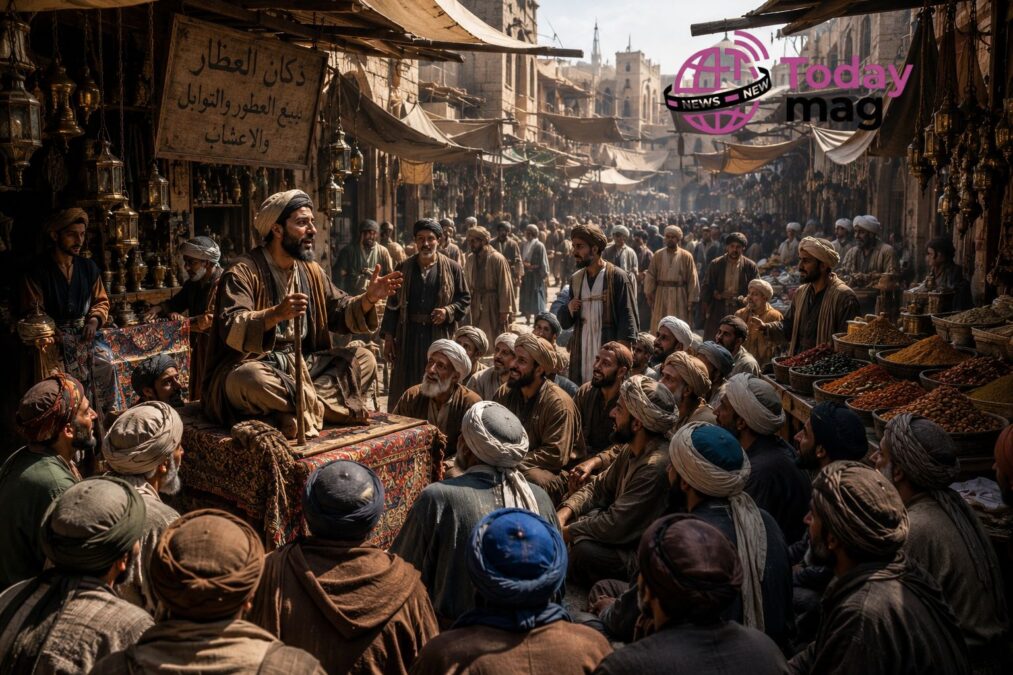
No discussion of Baghdad storytelling would be complete without mentioning One Thousand and One Nights, one of the most influential collections of stories ever created.
Although the collection contains tales from various regions and periods, many stories became closely linked with Baghdad City. The city often serves as the setting for adventures involving caliphs, merchants, scholars, and travelers.
Characters such as Harun al-Rashid, one of the most famous Abbasid caliphs, appear frequently in these narratives. The stories blend history with imagination, creating a captivating literary world.
The enduring popularity of One Thousand and One Nights demonstrates the power of storytelling traditions that developed in Baghdad. These tales have been translated into numerous languages and continue to inspire books, films, and theatrical productions around the world.
Muslim Values in Stories
Storytelling in Baghdad City was deeply influenced by Islamic principles and cultural values.
Wisdom was one of the most important themes. Many stories emphasized thoughtful decision-making and the pursuit of knowledge. Characters who acted with wisdom often achieved success, while those driven by greed or arrogance faced difficulties.
Justice also appeared frequently. Rulers were expected to govern fairly, and stories often highlighted the importance of treating people with dignity and respect.
Compassion and generosity were recurring values as well. Acts of kindness were celebrated, reinforcing social bonds within communities.
Faith provided another important foundation. While stories entertained audiences, they also encouraged reflection on ethical behavior and personal responsibility.
The Role of Poetry
Poetry occupied a special place in the culture of Baghdad City. Poets were admired for their ability to express emotions, ideas, and experiences through carefully crafted language.
Public poetry readings attracted large audiences, and poets often enjoyed positions of influence within society. Their works addressed topics such as love, friendship, philosophy, and spirituality.
Poetry and storytelling frequently overlapped. Many narratives incorporated poetic passages, enhancing their emotional impact and artistic beauty.
This literary tradition enriched Baghdad’s cultural life and contributed to the city’s reputation as a center of intellectual creativity.
Stories in Everyday Life
Storytelling was not limited to professional writers or scholars. Ordinary people in Baghdad City shared stories as part of daily life.
Families passed down tales through generations. Parents used stories to teach children important values and life lessons. Travelers recounted their experiences, introducing audiences to distant lands and cultures.
Community gatherings often featured storytelling as a form of social connection. Through shared narratives, people strengthened relationships and maintained cultural traditions.
This widespread participation helped ensure that storytelling remained a vibrant and living tradition throughout Baghdad’s history.
Influence Beyond Baghdad
The storytelling traditions of Baghdad City eventually reached audiences far beyond the Middle East.
As Arabic literature spread across different regions, many stories were translated into other languages. European scholars encountered these narratives through cultural exchanges and translation efforts.
The influence of Baghdad’s storytelling can be seen in various literary traditions. Themes of adventure, mystery, romance, and moral reflection found their way into global literature.
Writers from different cultures drew inspiration from the narrative techniques developed in the Islamic world. The impact of Baghdad’s literary heritage continues to be recognized by historians and literary scholars today.
History and Legend
One fascinating aspect of Baghdad City storytelling is the blend of historical reality and imaginative legend.
Some stories are rooted in actual events and historical figures. Others incorporate magical elements, mythical creatures, and extraordinary adventures.
Rather than viewing this combination as a weakness, many scholars see it as a strength. It reflects the way societies use stories to explore deeper truths about human nature, morality, and culture.
Legends helped preserve collective memories while allowing storytellers to engage audiences through creativity and imagination.
Preserving the Legacy
The literary heritage of Baghdad City has faced numerous challenges throughout history. Wars, invasions, and political changes have threatened historical records and cultural treasures.
Despite these difficulties, efforts to preserve manuscripts, books, and historical documents continue today. Libraries, museums, researchers, and cultural organizations work to safeguard this remarkable legacy.
Modern scholars study ancient texts to better understand the intellectual and cultural achievements of Baghdad during its golden age.
Preservation efforts ensure that future generations can continue learning from the stories that shaped one of history’s most influential cities.
Lessons for Modern Readers
The old stories of Baghdad City remain relevant because they address universal human experiences. Themes such as courage, honesty, friendship, ambition, and wisdom continue to resonate with readers across cultures.
These narratives remind us that storytelling is more than entertainment. Stories help people understand themselves, connect with others, and explore complex ideas.
In an age dominated by technology, the enduring appeal of Baghdad’s stories demonstrates the timeless power of human imagination. They show how narratives can preserve knowledge, strengthen communities, and inspire meaningful reflection.
Modern readers can still learn valuable lessons from these ancient tales, proving that great storytelling never truly grows old.
FAQs
What makes Baghdad City important in storytelling history?
Baghdad City became a major cultural center during the Islamic Golden Age, where storytelling, poetry, and literature flourished together.
Did Baghdad City influence famous stories like One Thousand and One Nights?
Yes, many tales in One Thousand and One Nights are linked to Baghdad City and reflect its rich tradition of storytelling and imagination.
How did Muslim culture shape storytelling in Baghdad City?
Muslim culture emphasized knowledge, morals, and education, which made storytelling a powerful way to teach values and preserve history.
Were stories in Baghdad City based on real events?
Many stories mixed real historical figures and events with imagination, creating a blend of fact, legend, and moral lessons.
Why are Baghdad City old stories still relevant today?
They explore universal themes like justice, wisdom, and courage, which continue to resonate with modern readers across cultures.
Conclusion
Baghdad City occupies a unique place in the history of storytelling. As a center of learning, culture, and intellectual exchange, it nurtured traditions that influenced literature across the world. The city’s storytellers preserved wisdom, celebrated imagination, and passed important values from one generation to the next.
From the bustling markets of the Abbasid era to the pages of famous literary collections, Baghdad’s stories have continued to captivate audiences for centuries. They reflect the richness of Muslim culture and its profound contribution to global civilization.
Today, the old stories of Baghdad City remain a testament to the enduring power of words. They remind us that storytelling is one of humanity’s greatest treasures, capable of connecting people across time, place, and culture.
