

FAANG companies are known for speed, focus, innovation, and strong execution. The term usually refers to Meta, Amazon, Apple, Netflix, and Google, but today many people use it more broadly to describe the work habits of top technology companies. The real value is not only in jobs or salaries. The better lesson is how these companies build daily systems that help people think clearly, work smarter, and improve consistently.
You do not need to work at a big tech company to learn from FAANG habits. Many of these habits are simple, practical, and useful for students, freelancers, business owners, office workers, creators, and anyone who wants better daily performance.
The goal is not to copy a stressful corporate lifestyle. The goal is to borrow the best parts: clear priorities, focused work, better communication, learning, feedback, and smart self-review.
| Label | Information |
|---|---|
| Topic | FAANG-Inspired Productivity Habits |
| Main Keyword | faang |
| Article Type | Productivity Guide |
| Focus Area | Daily Performance |
| Purpose | Improve focus and efficiency |
| Target Audience | Students and professionals |
| Key Benefit | Better work habits |
| Core Concept | Smart daily routines |
| Productivity Style | Deep work and discipline |
| Important Habit | Clear daily priorities |
| Learning Focus | Continuous improvement |
| Work Approach | Quality over multitasking |
| Long-Term Goal | Sustainable personal growth |
What Makes FAANG Habits Different?
The strongest FAANG habits are built around clarity. High performers do not simply work more hours. They try to reduce confusion, remove unnecessary steps, and focus on work that creates real results.
Amazon’s official leadership principles, for example, emphasize customer obsession, ownership, learning, action, and high standards. Google’s research on team effectiveness highlights psychological safety, dependability, structure, meaning, and impact as important parts of strong teams.
These ideas are useful outside big companies too. A student can use them to study better. A blogger can use them to write consistently. A small business owner can use them to make better decisions. The point is simple: good performance is not random. It comes from repeatable habits.
Start With Clear Priorities
One of the easiest FAANG-inspired habits is starting the day with clear priorities. Many people begin their day by checking messages, social media, or random tasks. This creates a reactive mindset. Instead of controlling the day, the day starts controlling them.
A better habit is to write down the three most important tasks before opening emails or apps. These tasks should be specific. “Work on website” is too broad. “Write the first 500 words of the article” is better. “Improve business” is unclear. “Review yesterday’s sales and update product pricing” is stronger.
This habit works because it gives your mind direction. When you know what matters, you waste less energy deciding what to do next. Even if the day becomes busy, you still have a simple map to follow.
Use the 3-Task Rule
The 3-task rule is powerful because it keeps your daily goals realistic. Many people create long to-do lists and feel disappointed when they complete only half of them. High performance is not about writing twenty tasks. It is about finishing the right few tasks with quality.
Choose three tasks that will make the biggest difference. One can be a deep work task, one can be a communication task, and one can be a personal improvement task. For example, a blogger might write one article section, update old content, and study keyword performance.
This method reduces mental pressure. It also creates a sense of progress. When you complete your three important tasks, the day feels successful instead of scattered.
Protect Deep Work
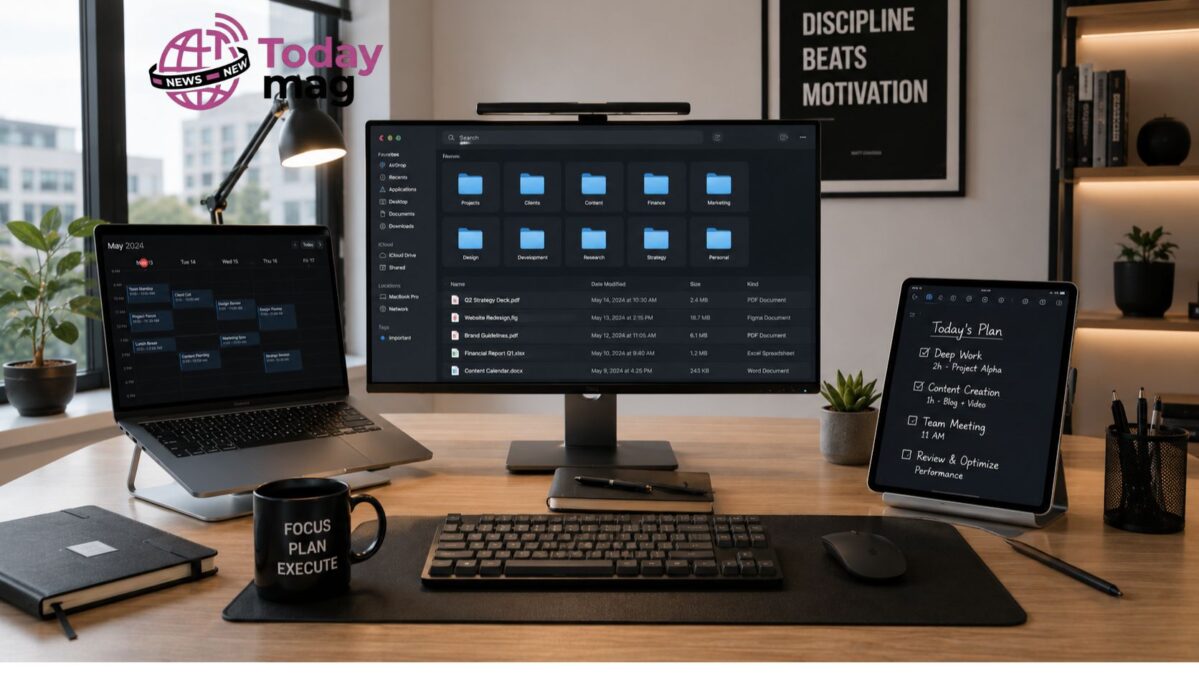
Deep work means giving full attention to one important task without constant interruption. This is one of the biggest performance habits inspired by high-level tech teams. Complex work needs focus. Writing, planning, coding, designing, studying, and decision-making all become weaker when attention is broken.
Modern work is full of interruptions. Microsoft’s Work Trend Index has studied how meetings, messages, and digital communication affect productivity across workplaces. Its research shows that knowledge workers face growing pressure from communication overload and constant work demands.
To protect deep work, create a fixed focus block. Start with 45 minutes if 90 minutes feels difficult. Turn off unnecessary notifications. Keep only the tab, notebook, or tool you need. Put your phone away from your desk. Tell yourself that this block is for one task only.
Small focus blocks, done daily, can produce better results than long hours of distracted effort.
Reduce Digital Noise
A clean digital space can improve daily performance more than people realize. Too many files, open tabs, unread messages, and scattered notes create hidden stress. Every time you search for something, your brain loses energy.
A FAANG-inspired approach is to build simple systems. Keep one place for tasks. Keep one folder for current work. Use clear file names. Archive old material. Delete things you do not need. Make your digital workspace easy to understand.
You do not need ten productivity apps. In fact, too many tools can create more confusion. A simple notes app, calendar, task list, and cloud folder may be enough. The best system is the one you can actually use every day.
Think From the User’s Side
One of the strongest habits from companies like Amazon is customer-focused thinking. Amazon describes customer obsession as starting with the customer and working backward.
This habit is useful for almost everyone. If you are writing a blog post, think from the reader’s side. What question are they trying to solve? What would make the article easier to understand? What examples would help them? If you are running a small business, think about what makes the buying experience smoother. If you are creating content, think about what gives real value instead of just filling space.
Customer-focused thinking improves quality because it shifts attention away from ego. Instead of asking, “What do I want to say?” you ask, “What does the reader or customer need to understand?”
Communicate Clearly
Clear communication is a major performance skill. In strong teams, people do not hide behind confusing language. They explain ideas simply, write useful updates, and make decisions easier for others.
A good daily habit is to write shorter, clearer messages. Before sending an email or message, ask: What is the main point? What action is needed? What information is missing? This simple check can prevent confusion and save time.
For example, instead of writing, “Please check this when possible,” write, “Please review the first draft by Friday and share any changes in the document.” The second message is clearer because it includes the task, deadline, and expected action.
Clear writing shows respect for other people’s time. It also makes you look more organized and professional.
Learn Every Day
One reason FAANG companies stay competitive is that learning is part of the culture. Technology changes quickly, and people who stop learning slowly fall behind. But daily learning does not need to be extreme. Even 20 minutes a day can build strong progress over time.
You can read a useful article, watch a lesson, practice a skill, review your mistakes, or study how successful people solve problems. The key is consistency. Learning once a month rarely changes much. Learning a little every day creates momentum.
A helpful habit is to keep a “learning note.” Write one thing you learned each day and one way you can apply it. This turns information into practical improvement.
Ask Better Questions
High performers ask better questions. Instead of saying, “Why is this not working?” they ask, “What part is not working, and what evidence do I have?” Instead of saying, “How can I get more done?” they ask, “Which task gives the highest return today?”
Better questions create better thinking. They help you move from emotion to solution. This is especially useful when you feel stuck.
Try asking these questions during your day: What matters most right now? What can I remove? What is the simplest next step? What result am I trying to create? These questions keep your mind focused and practical.
Use Feedback Without Ego
Feedback is not always comfortable, but it is one of the fastest ways to improve. In high-performance environments, feedback helps people correct mistakes early instead of repeating them for months.
The best habit is to treat feedback like information, not personal attack. If someone says your article is unclear, do not immediately defend it. Ask which part felt confusing. If a customer complains, look for the pattern behind the complaint. If your work did not perform well, study the reason instead of ignoring it.
Feedback becomes easier when you separate your identity from your work. You are not a failure because one task needs improvement. You are simply collecting data for the next version.
Build Psychological Safety
Google’s research on effective teams found that psychological safety is strongly connected with team performance. In simple words, people perform better when they feel safe to ask questions, share ideas, and admit mistakes without fear of embarrassment.
Even if you work alone, this idea still matters. You need a safe personal environment for honest reflection. If you criticize yourself harshly after every mistake, you will avoid learning. If you accept mistakes as part of improvement, you will grow faster.
In teams, this habit means listening respectfully, not mocking questions, and giving people room to speak. In personal work, it means being honest without being cruel to yourself.
Review Your Day
Daily review is a simple habit that many people ignore. At the end of the day, take five minutes to ask: What did I finish? What slowed me down? What should I improve tomorrow?
This habit turns each day into a lesson. Without review, mistakes repeat. With review, patterns become visible. You may notice that you work best in the morning, waste time after lunch, or lose focus when your phone is nearby.
A daily review does not need to be long. Three lines are enough. Write one win, one problem, and one improvement for tomorrow. Over time, this small habit can change the way you work.
Keep Health Part of Performance
Real performance is not only mental. Sleep, movement, food, hydration, and rest affect focus. Many people try to increase productivity while ignoring their body. That usually leads to burnout.
A FAANG-inspired performance routine should include recovery. Take short breaks. Walk daily. Drink water. Sleep properly. Stretch your body if you sit for long hours. These habits may seem basic, but they protect your energy.
High performance is not about pushing yourself until you break. It is about creating a routine that you can repeat without damaging your health.
Avoid Multitasking
Multitasking feels productive, but it often reduces quality. Switching between tasks forces the brain to restart again and again. You may feel busy, but the final output becomes weaker.
A better habit is single-tasking. Work on one thing, finish a meaningful part, then move to the next. If you are writing, write. If you are replying to messages, reply. If you are planning, plan. Do not mix everything at once.
Single-tasking brings calmness. It also helps you finish work faster because your attention is not divided.
Create Weekly Check-Ins
Daily habits are useful, but weekly check-ins give a bigger picture. Choose one day each week to review your progress. Look at what worked, what failed, and what needs adjustment.
This habit is common in many performance-focused environments because it helps people improve systems instead of only reacting to problems. A weekly check-in can include your goals, completed tasks, learning progress, health habits, and upcoming priorities.
Ask yourself: Which habit helped me most this week? Which task wasted time? What should I stop doing? What should I continue? What should I change next week?
These questions keep your routine fresh and realistic.
Start Small
The biggest mistake people make is trying to change everything at once. They plan a perfect morning routine, strict work blocks, daily learning, exercise, journaling, and digital cleanup all in one week. After a few days, the system becomes too heavy.
Start with one habit. For example, write three priorities every morning. Once that feels natural, add a focus block. Then add daily review. Small habits are easier to keep, and consistency is more important than intensity.
The best performance system is not the most impressive one. It is the one you can follow on ordinary days, busy days, and low-energy days.
Final Thoughts
FAANG-inspired habits are not only for tech employees. They are practical tools for anyone who wants to improve daily performance. Clear priorities, deep work, better communication, continuous learning, feedback, review, and healthy routines can help you work with more focus and less stress.
The real lesson is simple: performance improves when your habits support your goals. You do not need to be perfect. You only need to build small systems that make good work easier.
Start with one habit today. Choose your top three tasks, protect one focus block, or review your day for five minutes. Small improvements may not look powerful at first, but repeated daily, they can change the way you work, think, and grow.
FAQs
What does FAANG mean?
FAANG refers to major technology companies including Meta, Amazon, Apple, Netflix, and Google. The term is often linked with innovation, productivity, and high-performance work culture.
Can FAANG habits improve daily productivity?
Yes, many FAANG-inspired habits focus on better time management, deep work, communication, and continuous learning. These habits can help improve focus and efficiency in everyday life.
Do I need a tech job to use FAANG productivity methods?
No, these habits work for students, freelancers, business owners, writers, and office workers. The principles are useful for anyone who wants better performance and smarter routines.
Which FAANG habit is easiest to start with?
Starting the day with three clear priorities is one of the simplest and most effective habits. It helps reduce distractions and keeps your focus on important tasks.
Why is deep work important in FAANG culture?
Deep work allows people to focus fully on meaningful tasks without interruptions. This improves quality, creativity, and productivity over time.
