

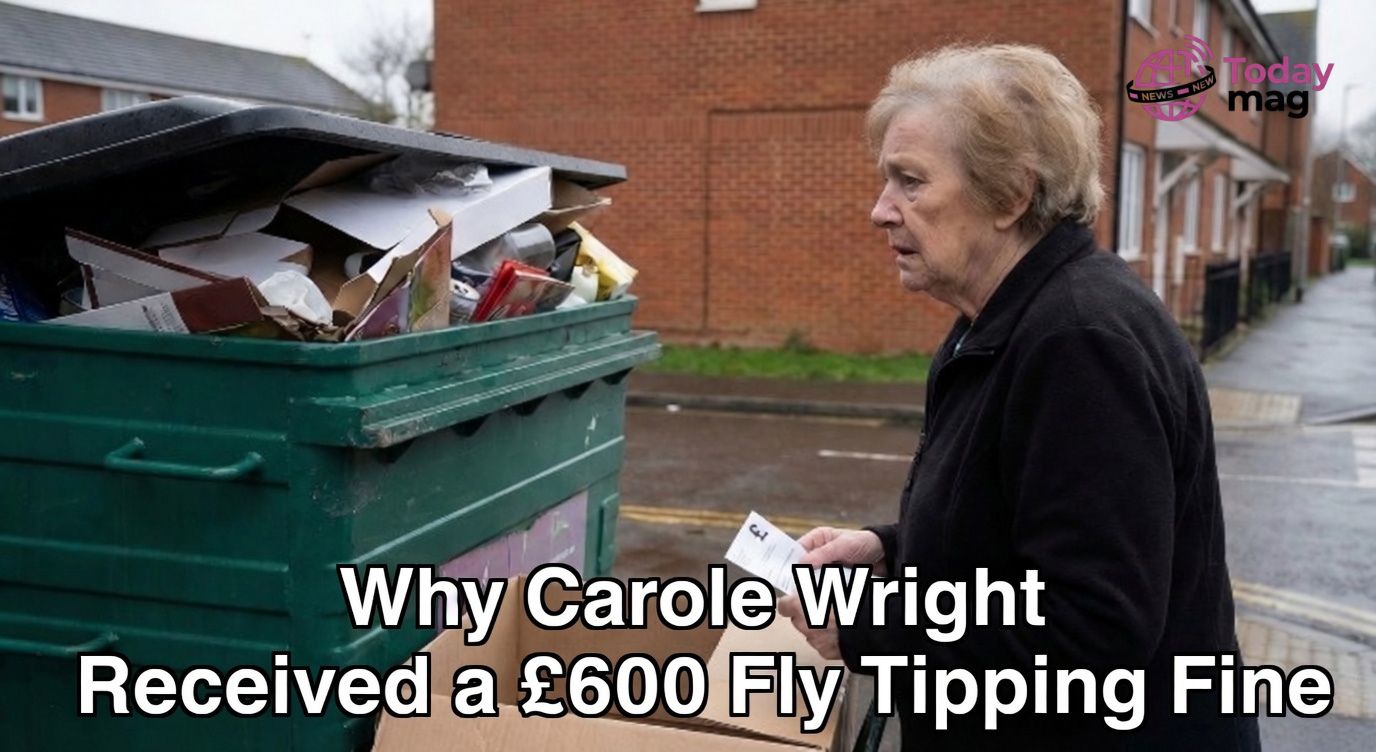
The story of the Carole Wright fly tipping fine has touched a nerve across the UK. An 83-year-old grandmother from Reading found herself facing a £600 penalty and the threat of court for what she believed was a simple act of responsible recycling.
Many people have asked how something so small could lead to such a heavy fine. This case highlights the tension between strict environmental rules and everyday common sense. In this article, we explore the full details of what happened, the legal background, and what it means for ordinary people trying to do the right thing.
Quick Bio
| Label | Information |
|---|---|
| Name | Carole Wright |
| Age | 83 years old |
| Location | Reading, Berkshire |
| Occupation | Former secretary and nurse |
| Fine Amount | £600 |
| Date of Incident | October 2025 |
| Item Involved | One cardboard box |
| Place of Incident | Milestone Community Centre |
| Enforcement Contractor | Kingdom |
| Issuing Authority | Reading Borough Council |
| Legal Basis | Environmental Protection Act 1990 |
| Current Status | Fine under appeal |
Who Is Carole Wright?
Carole Wright is an 83-year-old grandmother of four living in Reading, Berkshire. A former secretary and nurse, she is described by her family as sprightly, law-abiding, and active for her age.
Like many pensioners, she takes pride in handling her own household tasks and following the rules. Her daughter, Catherine Wright, has been vocal in supporting her mother through this difficult situation.
What Happened: The Full Timeline
In October 2025, Carole Wright visited the recycling drop-off point at the Milestone Community Centre in Reading. She had some household packaging, including a cardboard box from a new kitchen pan.
She found the recycling bins full. According to her account, she placed the cardboard neatly beside the bins, believing it would be collected as part of the recycling service. A few days later, a letter arrived from Kingdom, a private environmental enforcement contractor working for Reading Borough Council.
The letter included photographs showing the cardboard box with Carole’s name and address clearly visible. It accused her of fly-tipping and issued a Fixed Penalty Notice for £600. The notice gave her a short window to pay or risk court action and a possible criminal record.
Why the Incident Was Classified as Fly Tipping

Under UK law, fly-tipping includes leaving waste in a place where it is not authorised. Even placing items next to a full bin can be treated as an offence if they are not deposited inside the container.
Reading Borough Council, working through Kingdom, enforces these rules strictly. The box contained identifiable personal information, which made it easy to trace back to Carole. The council stated that they had sent an initial inquiry with no response received within 30 days, leading to the formal Fixed Penalty Notice under Section 34ZA of the Environmental Protection Act 1990.
Carole’s Side of the Story
Carole maintains she acted responsibly. She insists she tried to put everything in the bins but found them overflowing. Her family believes the box may have fallen out or been moved by wind or another person.
The ordeal has taken a visible toll. Her daughter reported that Carole has struggled to eat and feels stressed about the possibility of going to court or even prison. For an elderly woman who has always followed the law, this experience feels deeply unfair and intimidating.
The Council and Contractor’s Position
Reading Borough Council and Kingdom have defended their actions as part of a wider effort to tackle fly-tipping in the area. They argue that clear rules are necessary to keep public spaces clean and discourage irresponsible disposal.
Kingdom, as the enforcement contractor, uses photographic evidence and address tracing to issue notices quickly. In their view, the fine encourages proper use of recycling facilities and helps cover the costs of waste management.
Why the Case Sparked Such Strong Public Reaction
The Carole Wright fly tipping fine quickly gained national attention. Many people saw it as heavy-handed enforcement against a vulnerable pensioner over a minor issue. Headlines focused on the contrast: an 83-year-old woman versus a £600 fine for one cardboard box.
Social media and comment sections filled with frustration. Critics questioned whether councils should target elderly residents so aggressively when much larger illegal dumping problems exist. The story highlighted broader concerns about private contractors, fixed penalties, and the lack of discretion in some enforcement cases.
Understanding Fly Tipping Laws in the UK
Fly-tipping is a serious environmental crime in Britain. Local authorities have powers to issue Fixed Penalty Notices ranging from £150 to £1,000, with £600 being a common amount for smaller cases.
Leaving waste beside full bins technically falls under the definition because it has not been properly deposited. However, many argue that enforcement should consider context, especially when bins are overflowing and the person made a genuine effort.
There is often limited flexibility shown toward elderly or vulnerable individuals. This case has renewed calls for more common sense and better support for pensioners navigating recycling rules.
Practical Lessons from the Carole Wright Case
This incident offers several important takeaways. Always try to confirm that bins have space before leaving items nearby. If facilities are full, consider returning later or contacting the council to report the issue.
Keep a record of your visits to recycling points, perhaps by taking photos of full bins. If you receive a fine, seek advice quickly from citizens’ advice services or a solicitor rather than ignoring it.
For older residents, it may help to have family members assist with larger recycling trips or check local collection schedules in advance.
Broader Issues with Waste Enforcement
The Carole Wright fly tipping fine raises questions about how councils balance environmental protection with fairness. Private contractors often work on performance targets, which can lead to more notices being issued.
While fly-tipping costs the UK millions each year and harms communities, many feel the system sometimes misses the bigger picture. Better communication, improved bin infrastructure, and more understanding for vulnerable residents could prevent similar situations.
Final Thoughts on the Carole Wright Fly Tipping Fine
The case of Carole Wright continues to spark debate about proportionality in waste enforcement. What began as one grandmother trying to recycle properly turned into a stressful legal threat that affected her health and wellbeing.
As this story develops, it serves as a reminder for all of us to stay informed about local rules while also encouraging councils to apply common sense. Responsible recycling matters, but so does treating people with dignity and fairness.
Many hope this high-profile case will lead to a review of how such penalties are applied, particularly for elderly citizens. In the meantime, it has made thousands of people think twice about how they handle their household waste.
FAQs
Who is Carole Wright? Carole Wright is an 83-year-old grandmother from Reading, Berkshire. A former secretary and nurse, she is known by her family as a law-abiding and independent woman who takes care of her own household tasks.
Why was Carole Wright given a £600 fly tipping fine? She left a single cardboard box beside full recycling bins at a community centre. The council’s contractor, Kingdom, traced the box back to her address and issued a Fixed Penalty Notice under fly-tipping rules.
Did Carole Wright intentionally fly tip? No. Carole believed she was recycling responsibly. She says the bins were full and the box may have fallen or been moved. Her family insists it was an honest mistake, not deliberate fly-tipping.
Can an elderly person challenge a fly tipping fine? Yes. Anyone who receives a fine can contact the council to explain their side, provide evidence, or seek advice from Citizens Advice. In some cases, fines can be reduced or withdrawn.
What should I do to avoid a similar fine? Always check that recycling bins have space before leaving items. If they’re full, take your waste back home or report it to the council. Taking a quick photo of overflowing bins can also serve as useful evidence.
